
Chicken Egg Incubation Guide
A practical chicken egg incubation guide for temperature, humidity, turning, candling, lockdown, and hatch day decisions.
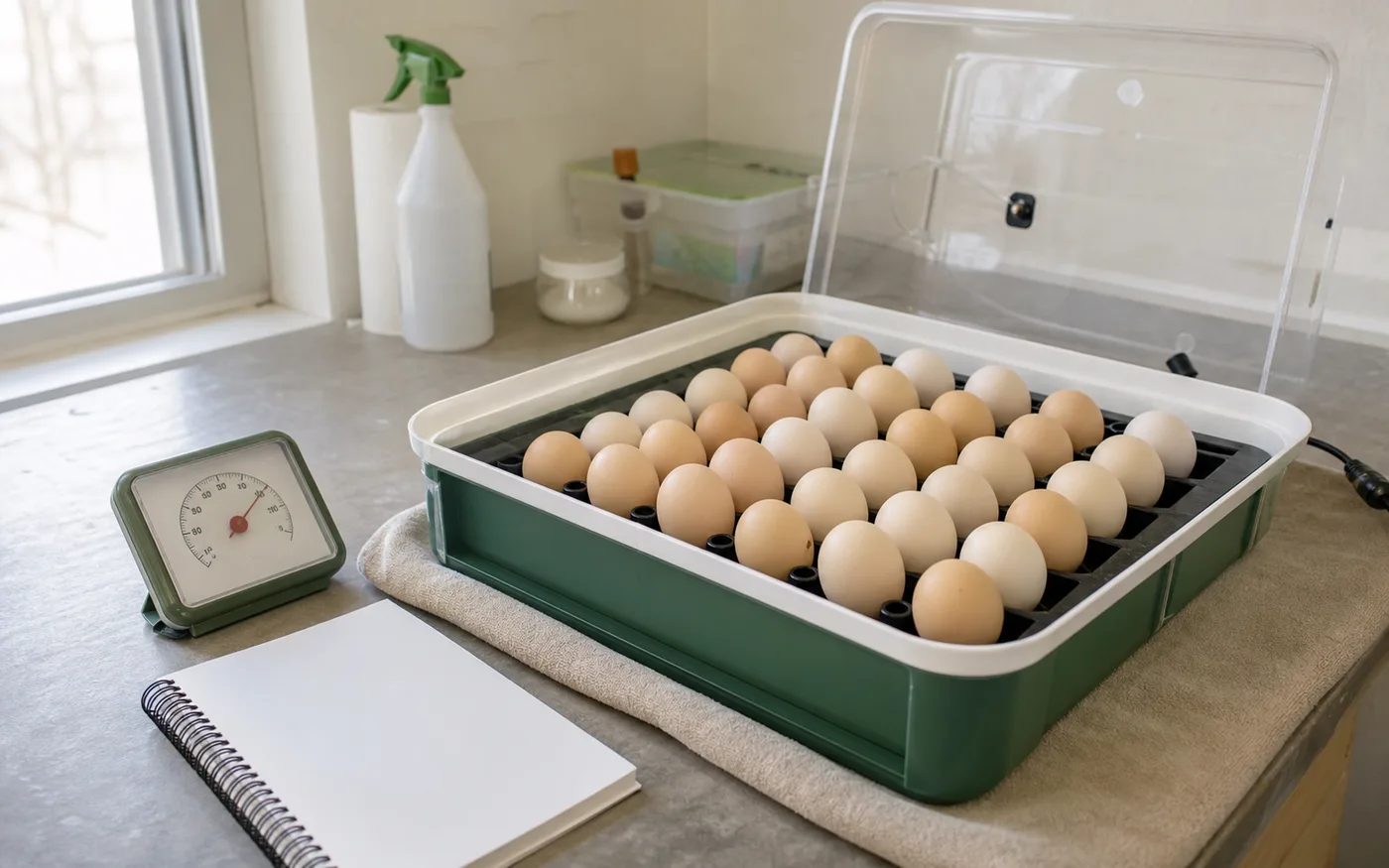
Show the dated plan before eggs are set.
The full chicken hatch path, from setup through hatch day, where each step works best when it is tied to the calendar and the evidence inside the egg.
Calculate Hatch DatesQuick Answer
Chicken eggs are usually planned as a 21-day hatch. Before setting them, run the incubator empty, verify the reading at egg level, choose clean and sound eggs, and write down the calendar. During incubation, keep temperature steady, turn eggs regularly until lockdown, candle at planned checkpoints, and use humidity as a moisture-loss pattern rather than a number to chase minute by minute. Around day 18, stop turning, move into lockdown conditions, reduce lid openings, and let hatch progress without rushing assistance.
What matters most
What this page helps you decide
Use this guide when you want the whole chicken hatch in one place: setup, daily care, candling, lockdown, and hatch day. It is not a substitute for your incubator manual, but it gives the practical order of operations so you are not guessing what to check next.
- Start with the incubator, room, thermometer, and egg quality before day 1.
- Use the calendar to separate normal waiting from real concern.
- Review the whole batch pattern before blaming one setting.
Start with a tested incubator
Most chicken hatch problems are easier to prevent before eggs go in than to fix after development starts. Run the incubator empty in the same room where the hatch will happen, then watch whether temperature and humidity settle into a usable pattern.
- Keep the incubator away from direct sun, drafts, vents, and big room swings.
- Check the turner, fan, lid fit, water channels, and vents.
- Use a separate thermometer or hygrometer if the display has not been verified.
Use the right starting targets
Chicken incubation guidance commonly centers around roughly 99.5 F in forced-air incubators, with still-air machines measured differently because heat layers inside the cabinet. Humidity should support steady moisture loss and a growing air cell, not become a number that causes constant lid opening.
- Forced-air incubators are commonly managed near 99.5 F for chicken eggs.
- Still-air incubators may need a higher reading at the correct measuring height.
- Moderate humidity during incubation usually rises for lockdown.
- Air-cell shape and weight-loss history are better evidence than a single humidity reading.
Turn eggs until lockdown
Turning helps the developing embryo stay positioned properly during the early and middle part of incubation. Manual turning should be simple to verify, and automatic turners should be checked rather than trusted blindly.
- Mark hand-turned eggs with pencil so movement is easy to confirm.
- Turn an odd number of times per day when turning by hand.
- Stop turning when lockdown begins so chicks can position for hatch.
Candle for evidence, not curiosity
Candling is most useful when it answers a specific question. Around the first planned candle, look for veins and early development. Later, look for growth, movement, air-cell size, and signs that the batch is following the expected timeline.
- Candle in a dark room with clean hands and a bright light.
- Separate clear eggs, blood rings, and uncertain eggs according to your safety process.
- Keep notes so day 14 and lockdown checks can be compared with day 7.
Treat lockdown as a different phase
Lockdown is not just the last few days of normal incubation. The chick is moving into hatch position, the air cell is about to matter, and unnecessary lid openings can make the hatch harder. Make the turner change, humidity change, and brooder check before pipping starts.
- For chicken eggs, lockdown is commonly planned around day 18.
- Stop turning and place eggs for hatch according to your incubator setup.
- Keep lid openings brief and intentional during pip and zip.
Know what to record
A hatch log turns one hatch into a better next hatch. Record the set date, egg count, source, temperature pattern, humidity pattern, candling results, lockdown date, hatch date, and final result. The notes are most useful when they separate fertility, incubation, and hatch-window problems.
- Record clears separately from late losses.
- Note outages, spikes, long lid openings, or turner failures.
- Compare hatch timing with the expected 21-day chicken calendar.
Reviewed against extension and veterinary sources. Adjust to your incubator manual and local conditions.