
Tabletop Vs Cabinet Incubators
A detailed comparison of tabletop and cabinet incubators to help you scale your hatch capacity.
Show readiness, setup, and maintenance.
The scale decision, where more capacity can either help the plan or create a bigger problem.
Estimate CapacityQuick Answer
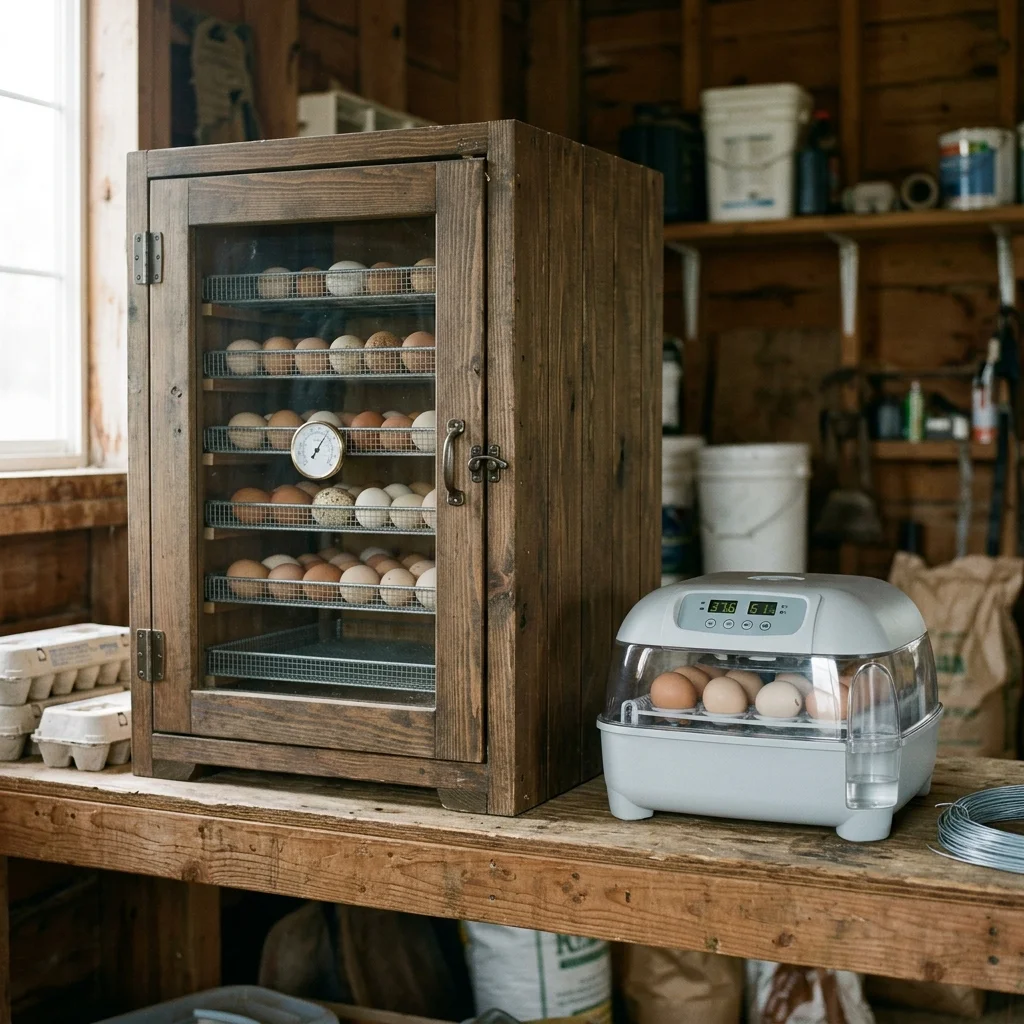
Tabletop incubators are ideal for beginners, backyard keepers, and classrooms, accommodating 10–50 eggs in a portable, easy-to-sanitize dome. Cabinet incubators are large, multi-shelved systems holding 100–1,000+ eggs, designed for serious breeders needing staggered hatches (setting and hatching concurrently). Choose tabletop models to learn the workflow and keep brooder space manageable. Only upgrade to a cabinet machine if you have a dedicated climate-controlled room, a commercial breeding program, and enough brooder space to accommodate large weekly hatches.
What matters most
What this page helps you decide
This comparison guide helps you decide the format of incubator that matches your poultry goals. The decision is choosing between compact, flexible tabletop units and large, permanent cabinet systems. Align your machine type with your annual hatch volume, budget, and workspace.
- Choose a tabletop model if you hatch 1–5 batches a year and want simple clean-up.
- Upgrade to a cabinet incubator if you require staggered sets or weekly chick production.
- Evaluate your brooding capacity before increasing your incubator size.
Tabletop Incubators: Pros and Cons
Tabletop incubators are the standard for backyard poultry. They are light, fit on a table, draw very little power (20-60W), and are easy to scrub in a domestic sink. However, they are sensitive to room temperature drafts and have limited water reservoir capacity.
- Capacity: Typically ranges from 7 to 48 chicken eggs.
- Ease of sanitation: High; plastic domes can be fully washed and sanitized easily.
- Vulnerability: High; small air volume means room temperature drops cause fast cooling.
- Best for: Backyard hobbyists, breed conservationists, and schools.
Cabinet Incubators: Pros and Cons
Cabinet incubators are designed for volume. They feature multiple shelves, high-power heating elements, and heavy-duty fans. Many models support staggered hatching, where you set new eggs on top shelves every week while bottom trays handle hatching.
- Capacity: Typically 100 to 1,000+ eggs.
- Setter-Hatcher Separation: Built-in trays allow different humidity levels for setting vs hatching.
- Weight and Size: Heavy, large footprints, requiring a dedicated garage or outbuilding.
- Best for: Commercial hatcheries, serious poultry breeders, and farms.
Decision Factors: Space and Brooders
Before buying, evaluate your workspace and power budget. A cabinet incubator running in an uninsulated barn will struggle in winter, consuming excessive power and risking temperature drops. Ensure your brooder setups can safely house the volume of chicks your machine will hatch.
- Electricity: Cabinets require continuous high wattage and benefit from dedicated circuits.
- Airflow: Large cabinets exhaust significant carbon dioxide; the room must be ventilated.
- Storage: Consider off-season storage space for a refrigerator-sized cabinet.
Reviewed against extension and veterinary sources. Adjust to your incubator manual and local conditions.