
Incubating Shipped Hatching Eggs
How to inspect, rest, candle, and set shipped eggs without treating them like local eggs.
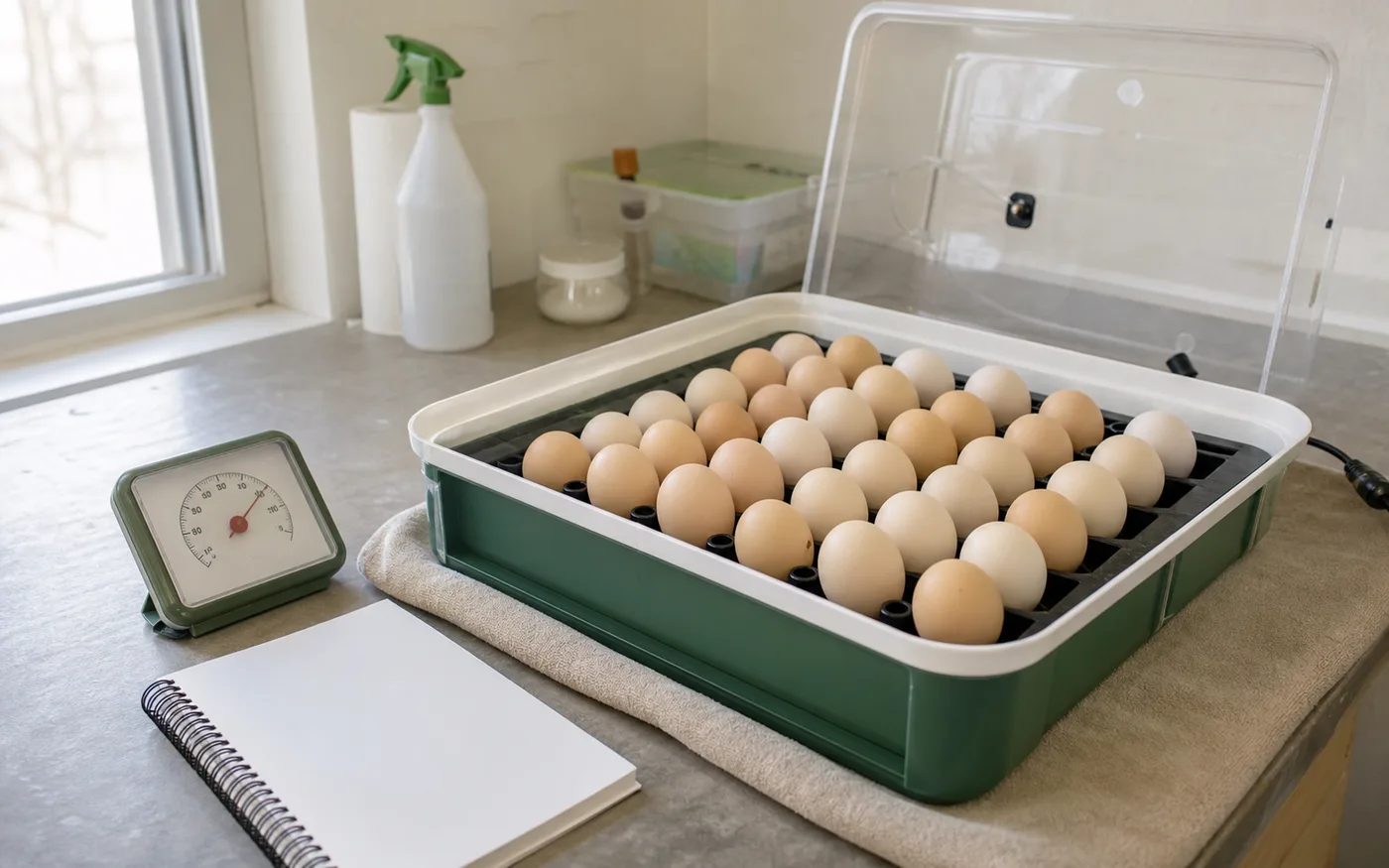
Show the dated plan before eggs are set.
The eggs have arrived, but the hatch has already been affected by packing, vibration, and travel time.
Plan Set DateQuick Answer
Shipped hatching eggs should be inspected, rested point-down, and candled for air-cell damage before setting. Expect more variation than local eggs and avoid making aggressive changes based on one egg.
What matters most
Start with a careful arrival check
Open the box gently and check each egg before it goes near the incubator. Cracks, leaks, strong odor, or heavy contamination are not small details; they can affect the rest of the batch.
Rest before setting
Shipping can disturb the air cell and contents of the egg. Resting eggs point-down gives the air cell a chance to settle before heat, turning, and development begin.
- Keep the large end up and pointed end down while resting.
- Avoid washing eggs just because they were shipped.
- Keep shipped eggs labeled so they can be reviewed separately later.
Candle for air-cell damage
A normal air cell stays at the large end. A detached or rolling air cell can make hatch positioning less predictable, so candle early and again before lockdown to understand what you are working with.
Reviewed against extension and veterinary sources. Adjust to your incubator manual and local conditions.