
Incubator Power Outage Guide
What to do when power fails during incubation and how to plan backup heat.
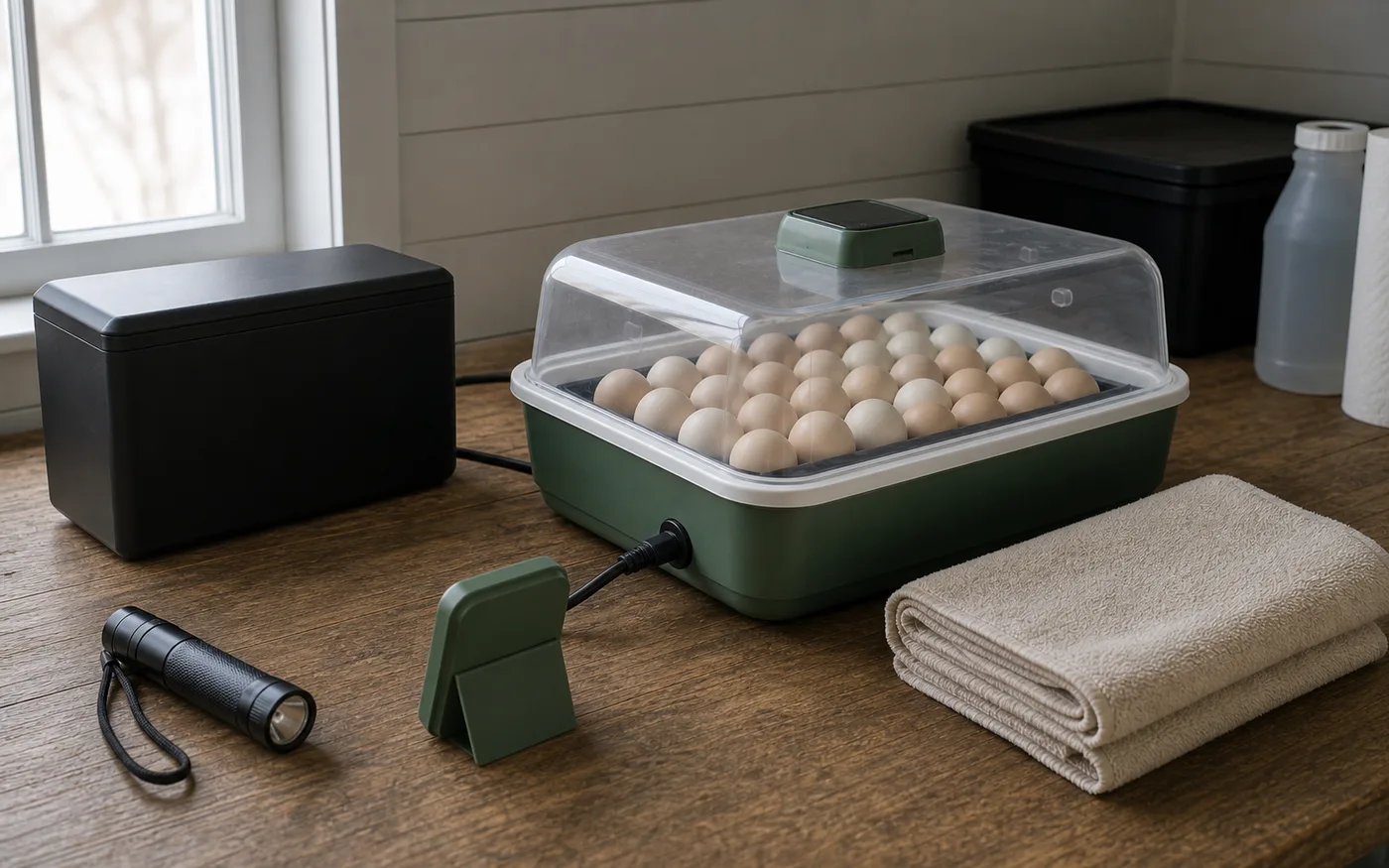
Show the emergency plan before power fails.
The interruption moment, when staying calm protects the hatch better than constant checking.
Calculate The Hatch WindowQuick Answer
If power goes out, keep the incubator closed, reduce heat loss, and restore steady conditions as soon as possible. The risk depends on incubation day, outage length, room temperature, and how much the eggs cooled.
What matters most
First response: protect the stable air
Opening the incubator usually loses heat faster than waiting with the lid closed. Unless there is a clear safety issue, keep the warm air inside while you decide the next step.
Do not overcorrect when power returns
A cold period is stressful, but overheating after power returns can create a second problem. Bring conditions back to normal and record what happened for the hatch result review.
Build backup into the hatch plan
Users in storm-prone or rural areas should think about outage risk before setting valuable eggs. A small UPS, battery system, generator plan, or warm interior room can reduce panic later.
Reviewed against extension and veterinary sources. Adjust to your incubator manual and local conditions.