
Incubator Ventilation Guide
How oxygen, carbon dioxide, vents, humidity, and hatch timing work together.
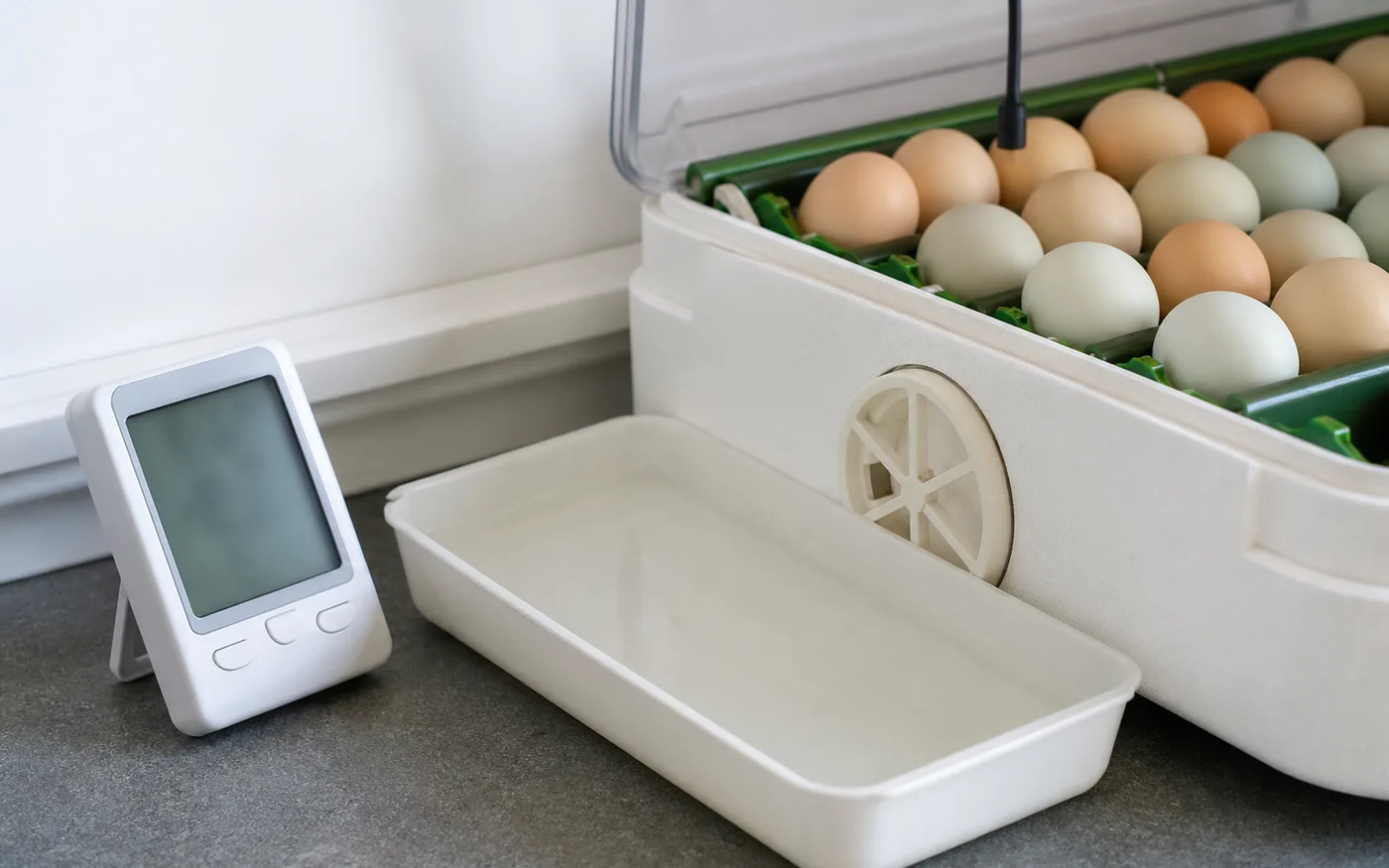
Show water, air, and moisture control as a visible setup.
The invisible exchange inside the incubator, where the egg is slowly changing the air around it.
Build A Hatch TimelineQuick Answer
Ventilation matters because embryos use oxygen and release carbon dioxide and moisture. The goal is not sealed humidity; it is steady incubation conditions with enough fresh air for development and hatch.
What matters most
A closed incubator is not the same as a sealed incubator
It is normal to keep the lid closed for stability, especially at lockdown. That does not mean the incubator should have no air exchange. Embryos are living and need fresh air as they grow.
Humidity is easier to understand with airflow in mind
Adding water raises moisture, but vents, room conditions, egg count, and hatch stage all change how humidity behaves. A useful setup watches patterns rather than chasing every single reading.
Hatch week changes the demand
As embryos grow and chicks begin to hatch, oxygen demand and moisture inside the incubator change. This is one reason ventilation guidance often becomes more important near hatch day.
Reviewed against extension and veterinary sources. Adjust to your incubator manual and local conditions.