
How To Turn Eggs During Incubation
Manual and automatic turning, marking eggs, and when to stop turning.
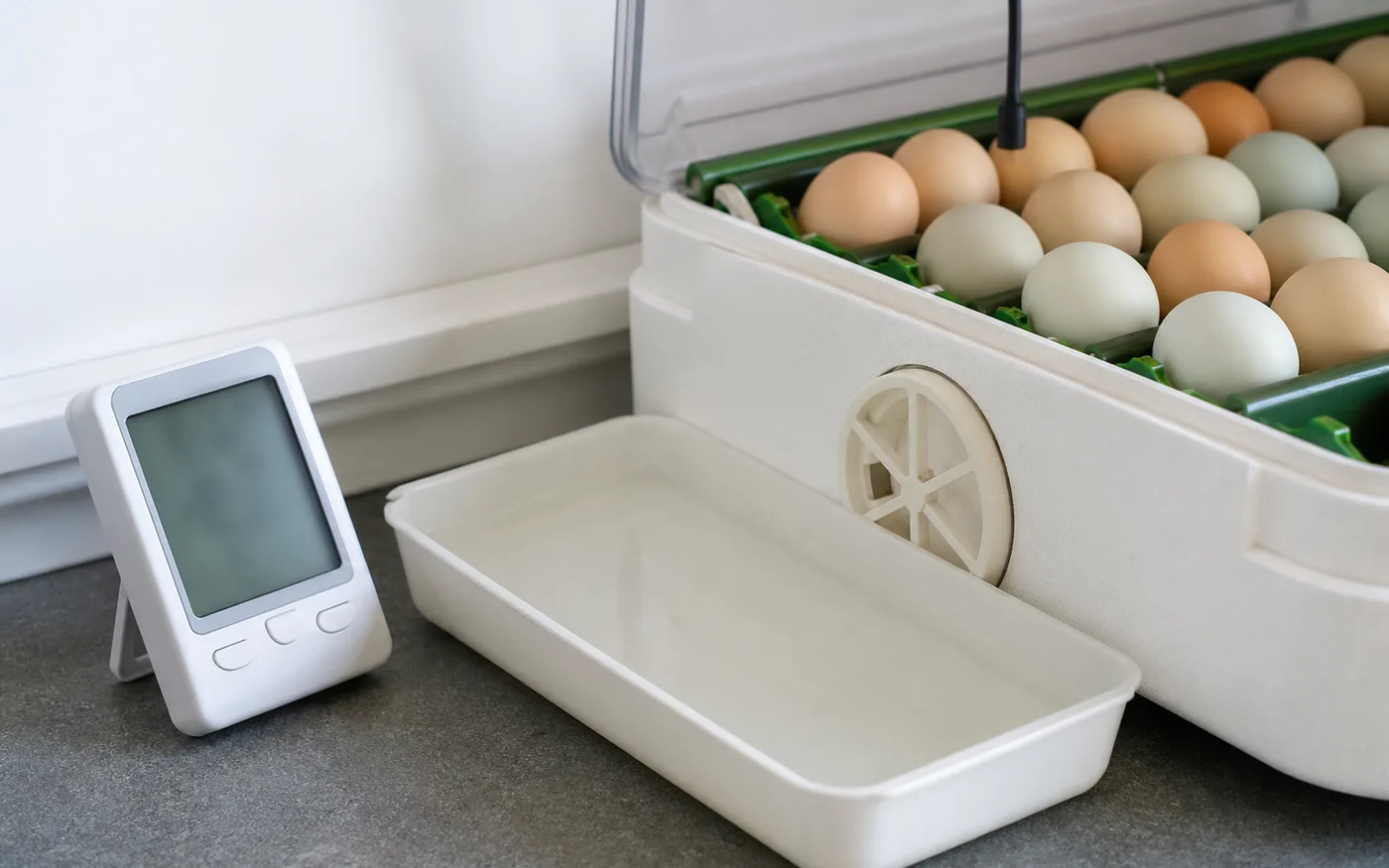
Show a repeatable turning routine.
The daily care rhythm, where small repeated actions matter more than dramatic intervention.
Calculate Lockdown DateQuick Answer
Eggs need regular turning during most of incubation and should stop being turned at lockdown. Turning helps keep the developing embryo from settling against the shell membranes too early, but it works best as a steady routine, not as a last-minute rescue. If you turn by hand, use simple pencil marks and a schedule you can actually follow. If you use an automatic turner, verify that it moves. At lockdown, stop turning so the chick can settle into hatch position.
What matters most
What this page helps you decide
Use this guide when you need to decide how often to turn, whether a turner is working, what to do after missed turns, or when to stop. The right answer depends on the species calendar, incubator setup, and whether the eggs are still before lockdown.
- Use the hatch calculator if you are unsure of the lockdown date.
- Fix a turner problem early instead of assuming the batch will self-correct.
- Do not keep turning once lockdown has started.
Turning is a routine, not a rescue
Turning works because it happens consistently over time. A careful daily rhythm is more useful than trying to correct several missed turns with extra handling later.
- Build turning into the same daily routine as checking readings.
- Avoid rough rotation, shaking, or long lid openings.
- Keep the routine simple enough that someone else can follow it if needed.
Manual turning should be easy to verify
If you turn by hand, mark opposite sides of the egg with simple pencil marks. The goal is not decoration; it is a quick visual check that every egg actually moved.
- Use pencil, not a strong marker.
- Wash hands before handling eggs.
- Keep the incubator open only as long as needed.
Automatic turners still need checking
An automatic turner reduces daily handling, but it can fail quietly. A turner may be unplugged, jammed, set incorrectly, or moving less than expected. Check it during the empty test and keep a simple visual reference during the hatch.
- Confirm movement before eggs are set.
- Make sure eggs fit the rails or cups without tipping awkwardly.
- Check that cords, trays, and lids do not block movement.
Missed turns need calm judgment
One missed turn is not the same as days of no movement. If you notice a missed turn, restart the normal schedule and record what happened. Avoid extra rough handling or repeated lid openings to make up for lost time.
- Resume the normal schedule instead of overcorrecting.
- Note the date, duration, and likely cause in the hatch log.
- Check whether the issue affected one tray, one egg, or the whole incubator.
Stop when lockdown starts
At lockdown, the chick needs to position for hatch. Stop turning, adjust humidity, and reduce opening the incubator so the hatch window stays stable.
- For chicken eggs, lockdown is commonly planned around day 18.
- Use the correct lockdown day for ducks, quail, turkey, goose, or other species.
- Remove or shut off automatic turners before pipping begins.
Record turning problems separately
Turning notes are valuable when the hatch result is uneven. A turner failure may affect one side, one tray, or one time period. Recording that detail helps you avoid blaming humidity or egg source for a mechanical problem.
- Record manual turning schedule, turner failures, and missed days.
- Note whether eggs were upright, angled, or on their side.
- Compare affected trays with the final hatch results.
Reviewed against extension and veterinary sources. Adjust to your incubator manual and local conditions.