
Shrink-Wrapped Chicks
How to think through dry membranes, stuck chicks, humidity, and hatch timing.
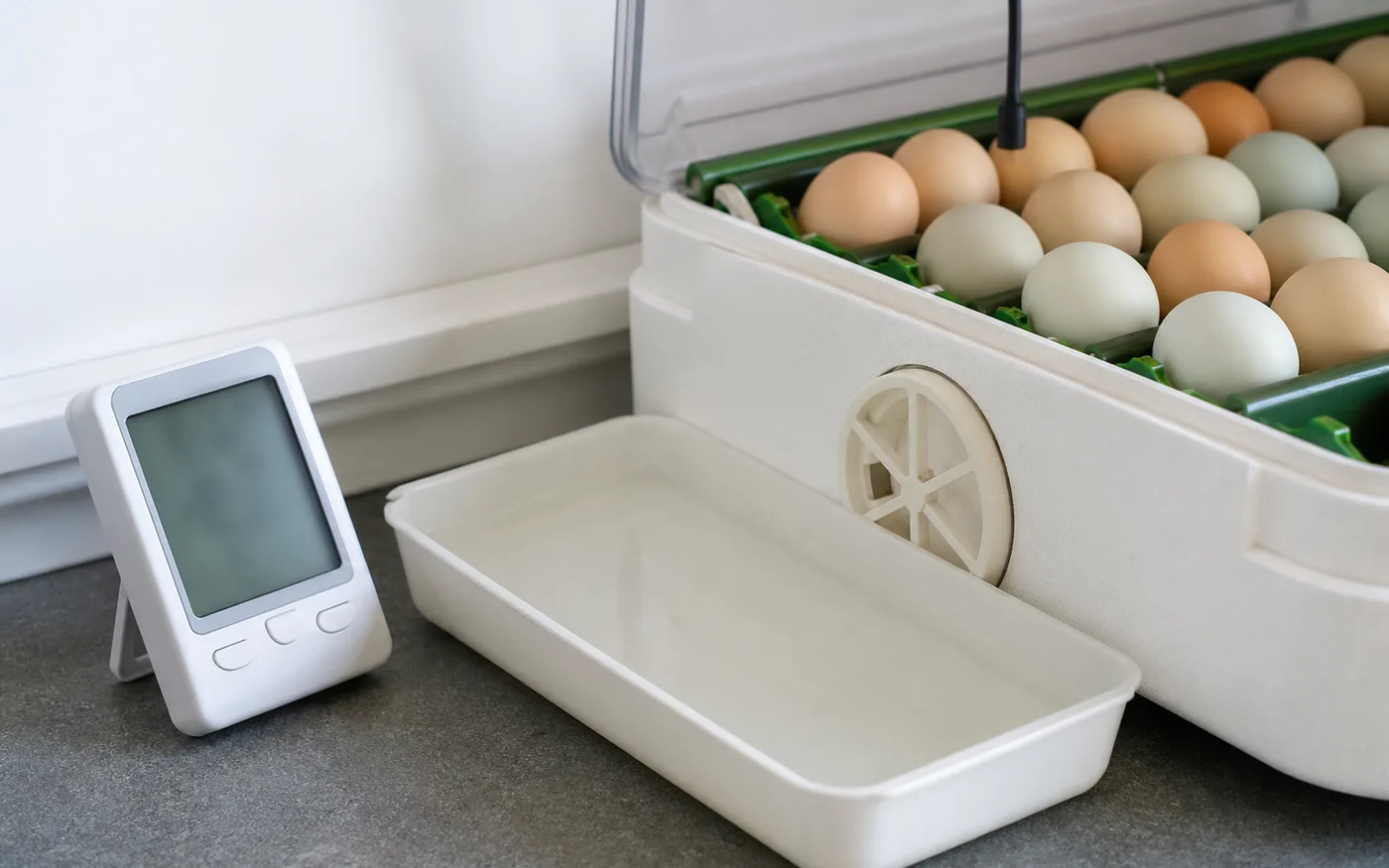
Show water, air, and moisture control as a visible setup.
The pip is there, progress has slowed, and the membrane looks dry enough to worry you.
Check Lockdown TimingQuick Answer
Shrink-wrapping means the membrane has dried tight around the chick, trapping it. It is commonly linked to moisture loss during hatch from opening the incubator lid. If you must assist a shrink-wrapped chick, apply warm water or sterile saline to the dry membrane to soften it, keep the incubator closed, and raise lockdown humidity to 70% RH.
What matters most
What this page helps you decide
This guide helps you decide if a chick is truly shrink-wrapped and how to manage incubator humidity to protect the remaining hatching eggs. The decision is choosing between opening the incubator lid to moisten a dry membrane or keeping the incubator sealed to maintain lockdown humidity.
- Choose lockdown (keep lid sealed) if the chick has been pipped for less than 12 hours and the membrane remains white and soft.
- Choose localized humidification if the membrane has turned yellow, brown, or paper-thin and wraps tightly around the chick's beak or limbs.
- Always stabilize the incubator environment to 70% RH before attempting an assist.
Emergency Membrane Humidification Protocol
When a chick is shrink-wrapped, the membrane loses its elasticity and traps the chick's wings and legs. Use this quick protocol to safely rehydrate the membrane:
- Preparation: Warm a small bottle of sterile saline or distilled water to 100 F (38 C). Do not use cool liquids.
- Quick Entry: Open the incubator lid slightly. Work quickly to prevent the hot, humid air from completely escaping.
- Target Application: Using a clean cotton swab (Q-tip), apply the warm water or coconut oil directly to the dry, exposed membrane. Do not drip water near the beak or nostrils.
- Observe Membrane: The membrane should change from dry yellow/white to translucent and pliable. If active blood vessels are visible, do not break the membrane.
- Reseal: Immediately close the incubator lid and allow humidity levels to recover to 70%+ RH.
Causes of Dry Membrane and Shrink-Wrapping
Prevention is much safer than intervention. Shrink-wrapping is caused by a sudden lack of moisture at the end of incubation.
- Lid Openings: Repeatedly opening the incubator lid during Days 19–21 is the most common cause. Every opening evacuates the high-humidity microclimate.
- Low Lockdown Humidity: Running lockdown below 60% RH causes the membranes to dry rapidly once the egg shell is punctured.
- Air Leakage: Defective incubator gaskets or excessive fan speeds can dry out specific spots inside the incubator cabinet.
Common Mistakes and Parameters to Log
Learn from shrink-wrap occurrences by tracking lid openings and environmental conditions.
- Mistake: Mistaking a normal rest period (up to 24 hours) for shrink-wrapping and peeling shell unnecessarily.
- Mistake: Applying cold water or petroleum jelly to the chick, which clogs skin pores and causes hypothermia.
- Parameter to Log: The count of lid openings during Day 18 to Day 21.
- Parameter to Log: Incubator relative humidity level before and after lid openings.
- Parameter to Log: The number of shrink-wrapped embryos in the batch.
Reviewed against extension and veterinary sources. Adjust to your incubator manual and local conditions.