
Should You Wash Hatching Eggs?
When dirty eggs should be rejected, cleaned, or left alone before incubation.
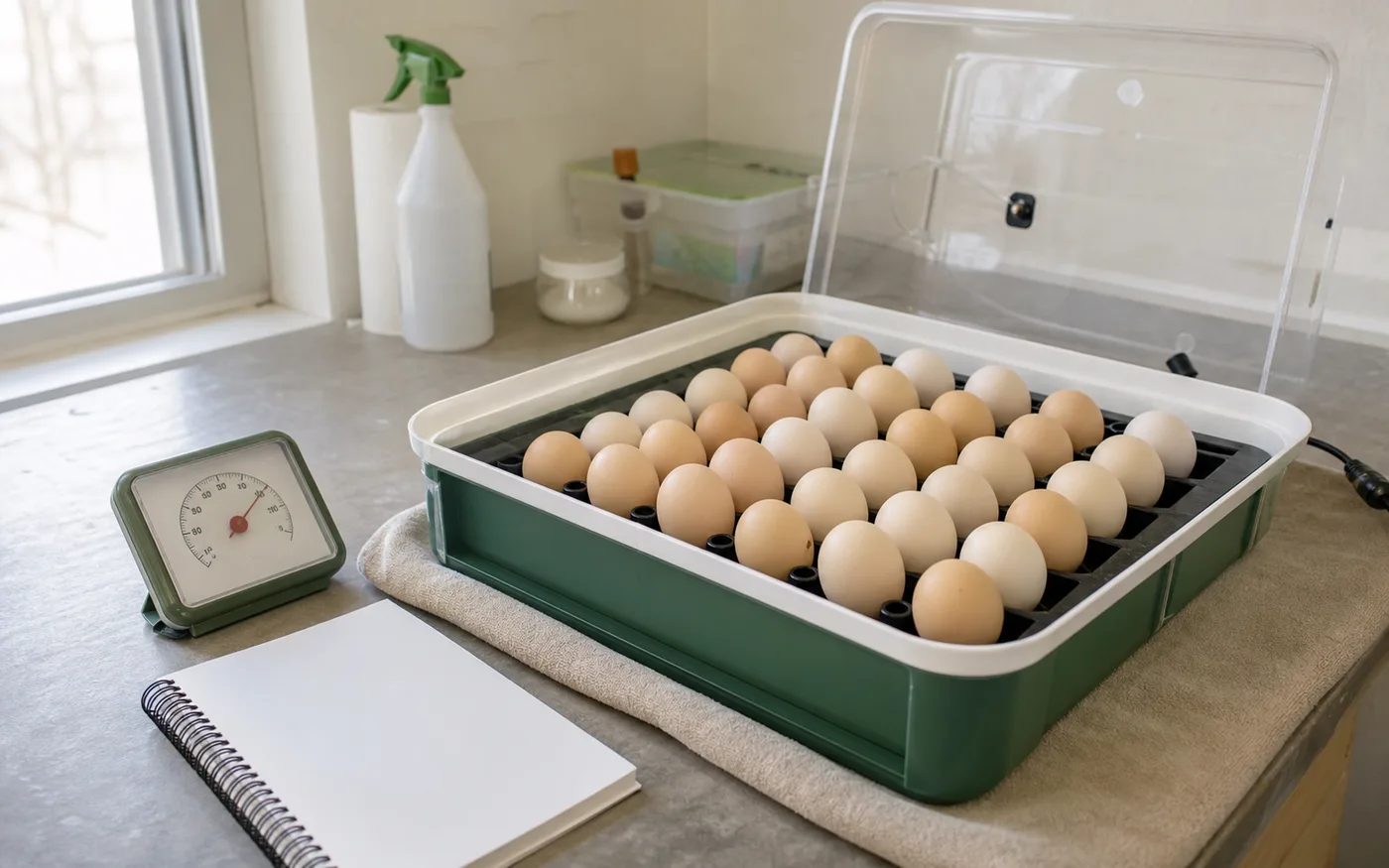
Show the dated plan before eggs are set.
The pre-set handling stage, when trying to make an egg look cleaner can sometimes make it riskier.
Plan Set DayQuick Answer
Do not wash hatching eggs casually. Clean, sound eggs are best; heavily dirty, cracked, or leaking eggs are usually better rejected. If cleaning is necessary, use careful handling and avoid forcing contamination through the shell.
What matters most
Clean eggs start before collection
Nest cleanliness, collection frequency, storage, and gentle handling matter more than trying to rescue dirty eggs later. The safest hatch egg is clean, intact, and handled gently from the start.
Why washing can be risky
Eggshells have pores and a natural protective surface. Poor cleaning can move contamination, add moisture problems, or damage the egg surface before incubation begins.
When to reject instead
A very dirty, cracked, leaking, or bad-smelling egg is not just ugly; it can threaten the rest of the incubator. When in doubt, protect the batch.
Reviewed against extension and veterinary sources. Adjust to your incubator manual and local conditions.