
Incubation Humidity Chart
Species humidity reference chart with air-cell and hatch-stage context.
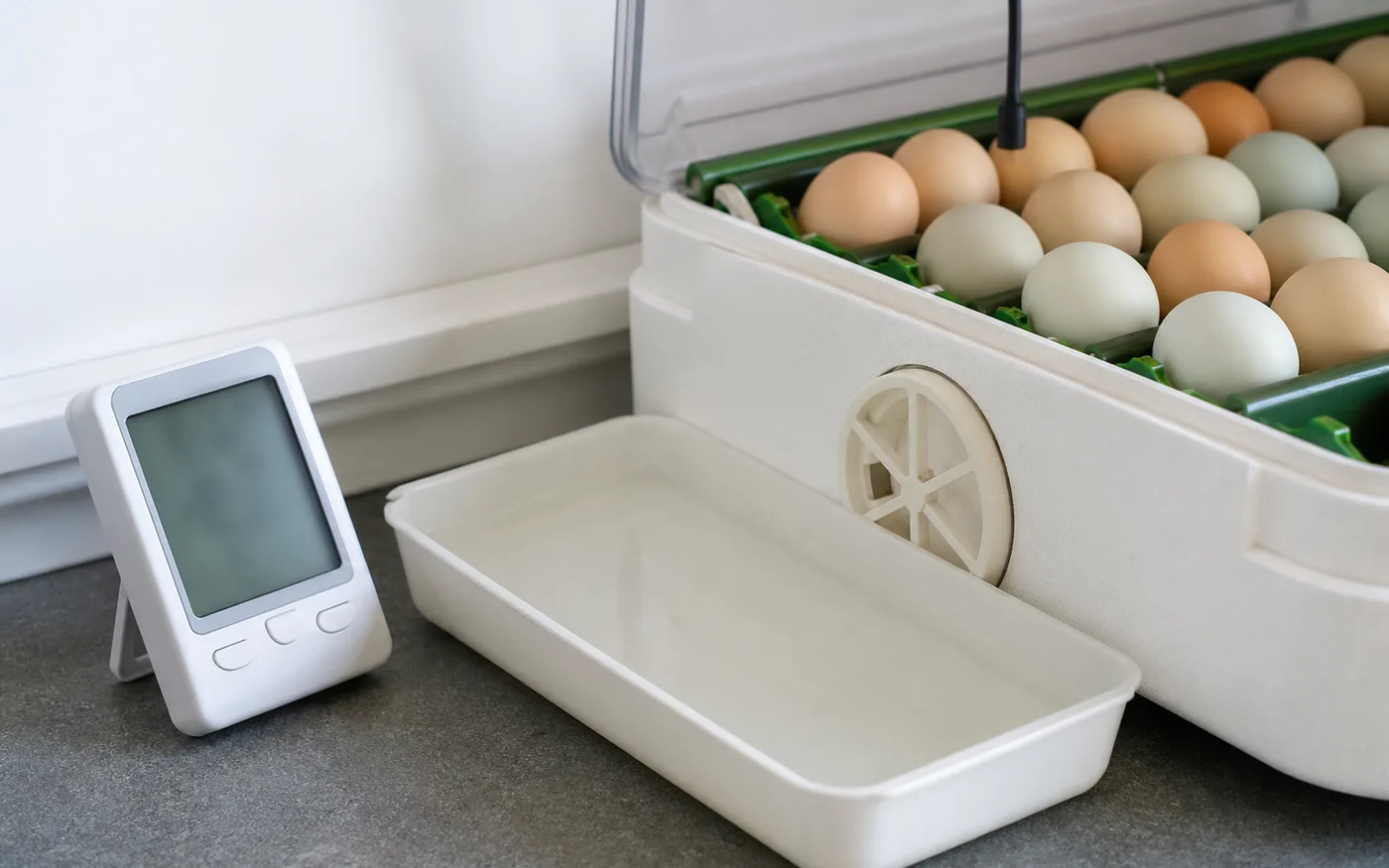
Show water, air, and moisture control as a visible setup.
The moisture-management stage, where the egg is slowly losing water and building the air cell the chick will use at hatch.
Track Air CellsQuick Answer
Humidity is best treated as a pattern, not one magic number. Use chart ranges with air-cell growth, egg weight loss, species, ventilation, and hatch-stage behavior before making changes.
What matters most
Humidity ranges need context
A humidity chart helps users start, but the real hatch depends on species, shell quality, room conditions, water surface area, airflow, and how often the incubator is opened.
Use air cells as the evidence check
If air cells are consistently too large, eggs may be losing too much moisture. If they are consistently too small, moisture loss may be too low. One odd egg should not drive the whole hatch plan.
Lockdown is different
Near hatch, humidity often needs to support pipping and zipping. Opening the incubator repeatedly during this stage can change conditions at the worst time.
Reviewed against extension and veterinary sources. Adjust to your incubator manual and local conditions.