
Hatch Was Early Or Late
Use hatch timing as a clue for temperature patterns, egg storage, species, and calibration.
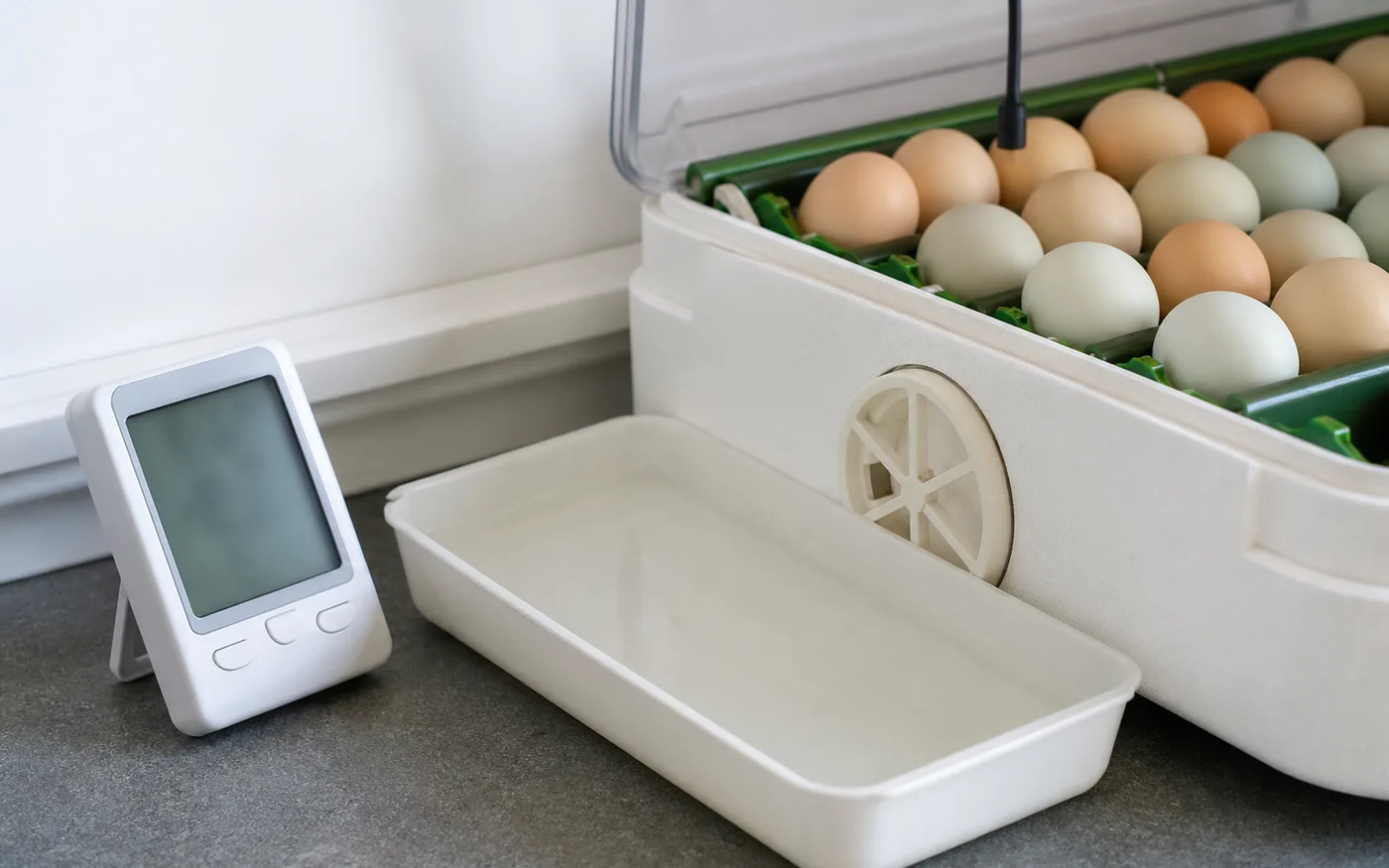
Show trusted measuring instead of guessing.
The chicks hatched, but the timing is telling you the incubator story may not match the calendar.
Run Pre-Season CheckQuick Answer
Early or late hatches often point toward temperature patterns, but species, egg age, storage, and thermometer accuracy must be checked before changing the incubator. An early hatch (before Day 21) indicates the incubator ran slightly too warm; a late hatch (after Day 21) indicates it ran too cool. Adjust settings by 0.2°F to 0.5°F (0.1°C to 0.3°C) steps for the next batch.
What matters most
What this page helps you decide
This timing diagnostic guide helps you decide how to correct your incubator's temperature settings based on the final hatch timeline. The decision is choosing between leaving settings alone, lowering incubator temperature for the next set, or raising incubator temperature for the next set.
- Choose to lower temperature by 0.3 F (0.2 C) next set if the majority of the chicks completed hatching before Day 20.
- Choose to raise temperature by 0.3 F (0.2 C) next set if the hatch was delayed until Day 22 or Day 23.
- Do not adjust settings if only a few eggs hatched off-schedule, but the bulk finished on Day 21.
Expected Incubation Duration by Species
Before concluding a hatch is early or late, verify that your expectations align with the standard physiological gestation timeline for your species:
- Quail (Coturnix): 17 to 18 days.
- Chicken (All breeds): 21 days (504 hours). Shipped eggs or old eggs can naturally delay this by 12–24 hours.
- Pheasant: 23 to 24 days.
- Duck (Mallard/Pekin) & Turkey: 28 days.
- Goose: 28 to 30 days.
- Muscovy Duck: 35 days.
Thermometer Verification and Calibration
Adjusting your incubator thermostat dial without checking your sensor calibration is extremely risky. Sensor drift is a common hardware issue.
- Ice Bath Test: Submerge your thermometer probe into a glass of crushed ice and water. It must read 32.0 F (0.0 C) +/- 0.5 F. If it reads 33.5 F, your thermometer is reading 1.5 F too high.
- Probe Position Check: Verify that the thermometer probe is positioned at the top height of the eggs. In still-air incubators, temperature decreases by 1 F for every half-inch closer to the bottom.
- Draft Audit: Confirm the incubator is not near a window, heater, or air conditioner vent. Room drafts cause localized heating cycles that delay development.
Common Mistakes and Parameters to Log
Avoid mid-hatch adjustments and document precise timeline milestones to identify long-term heating trends.
- Mistake: Changing the temperature setting during lockdown or hatching. Changing settings then can shock hatching chicks.
- Mistake: Confusing a delayed hatch caused by cold storage of eggs prior to incubation (which delays start) with low incubator temperatures.
- Parameter to Log: Date and hour when eggs were first set.
- Parameter to Log: Hour of the first external pip, first hatched chick, and last hatched chick.
- Parameter to Log: Average daily temperature readings from your calibrated secondary probe.
Reviewed against extension and veterinary sources. Adjust to your incubator manual and local conditions.