
Incubator Temperature Spike
What to do after a temperature spike and how to judge risk without guessing.
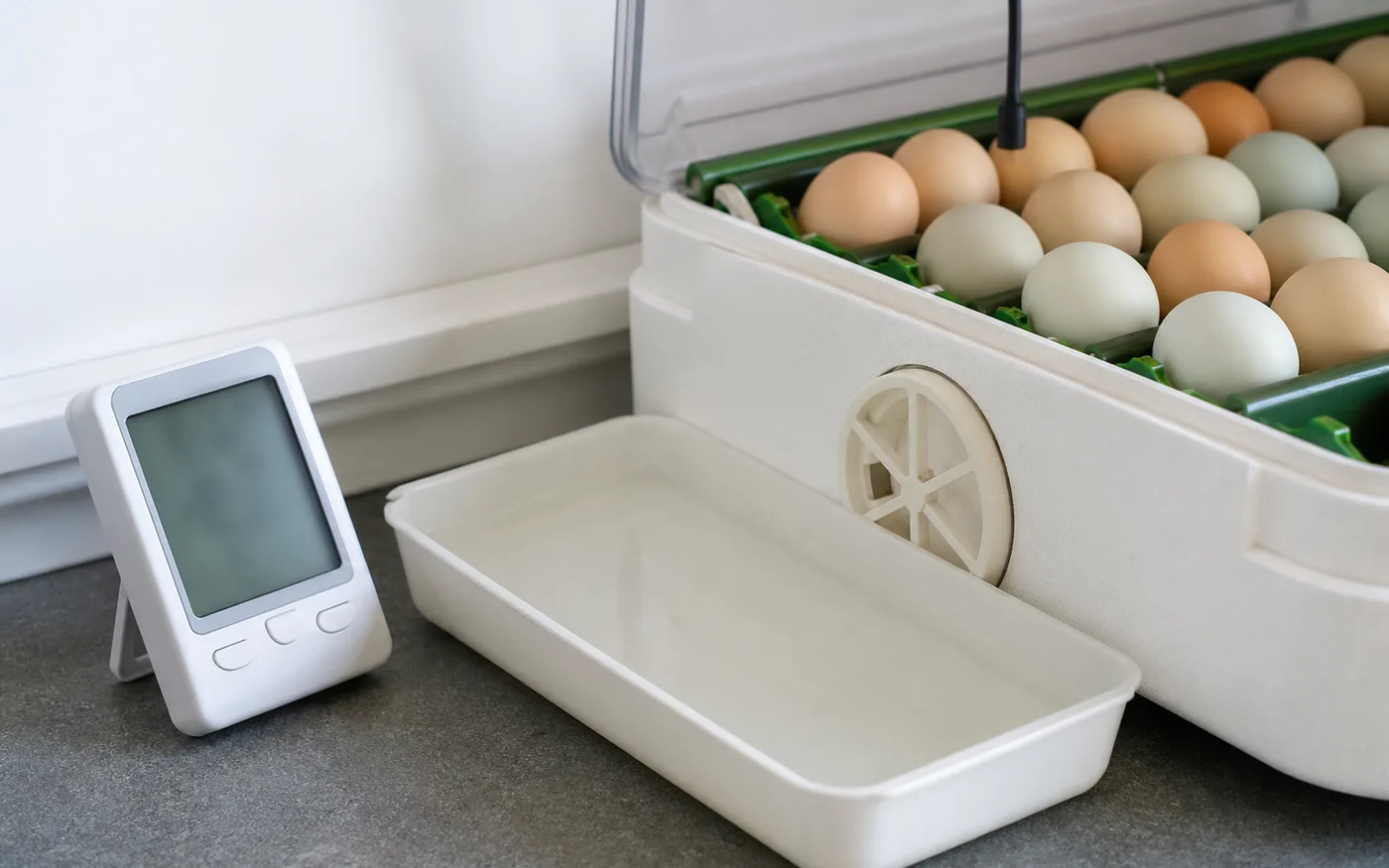
Show trusted measuring instead of guessing.
The thermometer showed a number you did not want to see, and now the question is what damage, if any, was done.
Run Pre-Season CheckQuick Answer
After a temperature spike, bring the incubator back to target range, record how high and how long it ran, and watch the hatch pattern. Spikes up to 102°F (38.9°C) for a short time are usually survivable, but spikes over 104°F (40°C) for more than 2 hours are often fatal. Candle the eggs 48 hours later to check for movement or new blood rings before discarding.
What matters most
What this page helps you decide
This emergency guide helps you decide how to respond to an incubator overheating event and how to determine if the embryos have survived. The decision is choosing between immediately adjusting or cooling the eggs, keeping the eggs in the incubator for a recovery trial, or discarding the batch.
- Keep the eggs incubating if the spike was below 103 F (39.4 C) or lasted less than 2 hours.
- Discard individual eggs only if clear blood rings or absolute lack of movement is confirmed via candling 48 hours post-spike.
- Relocate the incubator if room environmental factors caused the spike.
Overheating Recovery Protocol
Embryos are highly sensitive to excess heat. High temperatures speed up cellular metabolism, quickly leading to oxygen starvation and brain damage. Follow this protocol immediately upon discovering a spike:
- Gradual Stabilization: Adjust the incubator back to 99.5 F (37.5 C). Do not shut the incubator off completely or expose the eggs to cold drafty air, which causes thermal shock.
- Determine the Source: Check if the room is hot, if direct sunlight is hitting the incubator, or if water got onto the thermostat sensor probe.
- Log the Details: Write down the highest temperature reading, the estimated duration, and the current day of incubation (early embryos are more resilient than late-stage chicks).
- Wait 48 Hours: Embryonic death from overheating is not always instantaneous. Give the cells time to recover or show signs of loss.
- Viability Candling: After 48 hours, candle the eggs in a dark room. Look for moving shadows or pulsing blood vessels. If you see blood rings or floating, structureless shadows, the embryos have died.
Lethal Temperatures by Incubation Stage
The developmental stage of the embryo dictates its thermal tolerance. Older embryos produce their own metabolic heat, compounding the danger of a spike.
- Days 1–7 (Early): Highly vulnerable to birth defects, but can sometimes survive short temperature spikes up to 103 F (39.4 C).
- Days 8–17 (Mid): Moderate tolerance. A spike above 104 F (40 C) for more than 4 hours is usually lethal.
- Days 18–21 (Lockdown): Extremely vulnerable. The chick is large and breathing air. Spikes above 103 F (39.4 C) for over 1 hour frequently cause suffocation.
Common Mistakes and Parameters to Log
Avoid panic reactions that worsen the hatch and maintain detailed logs to identify equipment failures.
- Mistake: Throwing the entire set of eggs away immediately without a 48-hour candling trial.
- Mistake: Chasing cheap incubator thermostat dials back and forth without verifying average readings using a calibrated sensor.
- Parameter to Log: The maximum temperature recorded and estimated duration.
- Parameter to Log: Current incubation day at the time of the spike.
- Parameter to Log: Ambient room temperature peak.
Reviewed against extension and veterinary sources. Adjust to your incubator manual and local conditions.