
Sticky Chicks
What sticky residue can mean during hatch and what to review before changing the next batch.
Show water, air, and moisture control as a visible setup.
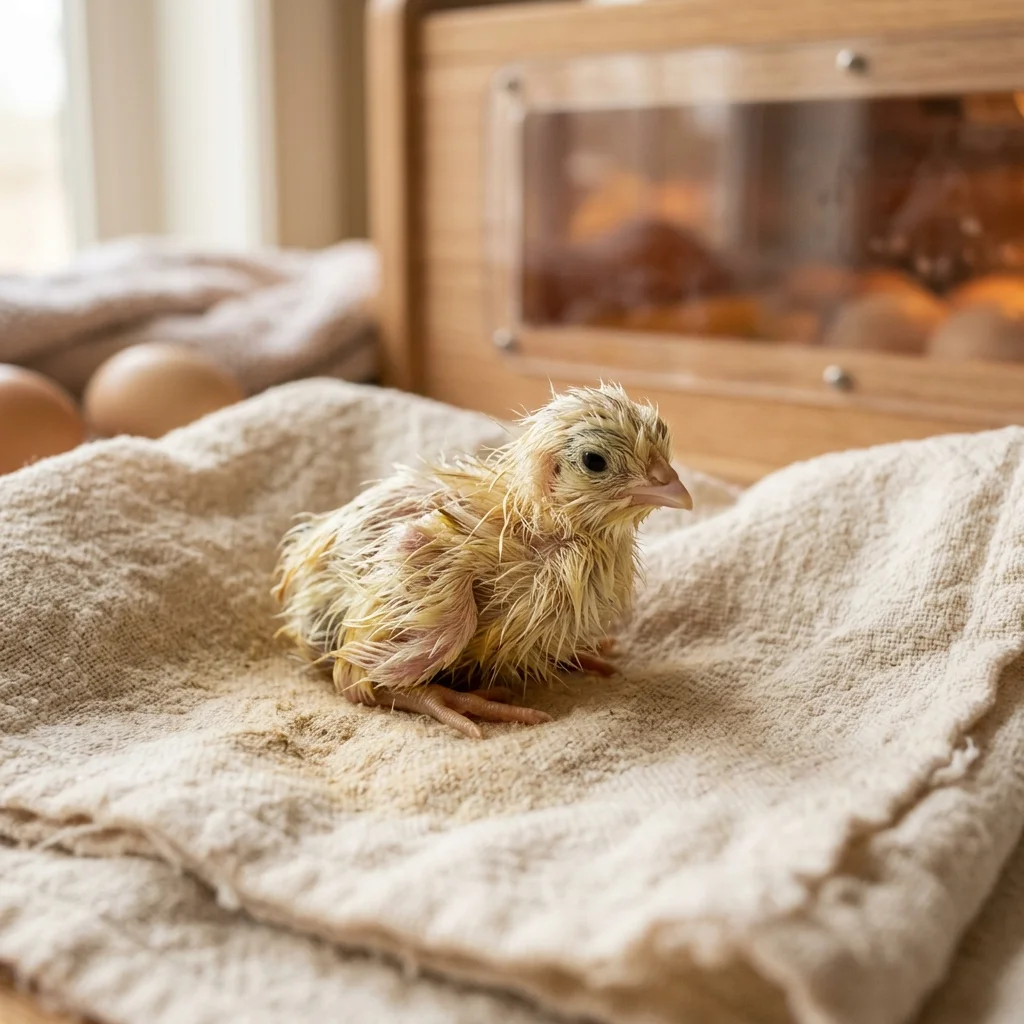
The hatch is messy, chicks are slow to dry, and the result needs a calm review instead of a quick blame.
Review Hatch RateQuick Answer
Sticky chicks usually point to hatch conditions that need review, especially humidity, ventilation, egg handling, or timing. Do not treat one sticky chick as proof by itself; compare the whole hatch pattern first. Sticky residue is usually caused by excess humidity (above 45% RH) during Days 1–17 or poor ventilation, preventing proper moisture loss.
What matters most
What this page helps you decide
This guide helps you decide how to manage sticky hatched chicks and how to adjust your incubator to prevent sticky hatches in the future. The decision is choosing between active chick clean-up measures or correcting ventilation and relative humidity parameters for the next hatch.
- Choose immediate clean-up if a chick is covered in sticky residue and unable to dry or stand.
- Choose lower humidity settings (40%–45% RH) for Days 1–17 if more than 10% of hatched chicks are sticky.
- Open incubator vents further if humidity remains high despite adding no water.
Sticky Chick First Aid Protocol
Sticky albumen residue will glue chick down together, preventing them from drying and regulating their body temperature. Follow this gentle cleaning protocol:
- Water Temperature: Prepare water at 100°F–105°F (38°C–40°C). Never use cold water as it causes rapid hypothermia.
- Dab, Don't Soak: Dampen a cotton swab or soft paper towel. Gently wipe and dab sticky spots. Never submerge the chick or wet its entire body.
- Avoid the Head: Do not get water near the nostrils, eyes, or beak.
- Dry Immediately: Place the chick under a brooder heater plate or warm heat source (95 F / 35 C) immediately after cleaning.
- Minimize Handling: Once the bulk of the sticky residue is gone, let the chick dry completely; remaining residue will flake off naturally as it grows.
Root Causes of Sticky Albumen
Sticky chicks occur when albumen fails to break down or when the chick cannot absorb the fluid properly. This is almost always a humidity or ventilation issue.
- High Incubation Humidity: Relative humidity above 50% during Days 1–17 prevents the egg from losing the required 11%–14% weight, leaving excess fluid in the shell.
- Poor Ventilation: Keeping incubator vents closed traps moisture and reduces oxygen levels, weakening the chick's metabolic rate.
- Incubator Temp Fluctuation: High average temperatures can speed hatch timing before the chick is finished absorbing fluids.
Common Mistakes and Parameters to Log
Avoid dangerous cleaning errors and record specific hatch indicators to prevent recurrence.
- Mistake: Bathing the chick in a bowl of warm water, which strips the natural skin oils and causes fatal chilling.
- Mistake: Pulling dried shell fragments off the skin, which easily tears the chick's thin epidermis.
- Parameter to Log: Daily incubator humidity averages for Days 1–17.
- Parameter to Log: Vent opening percentage during lockdown.
- Parameter to Log: Number of chicks displaying sticky down.
Reviewed against extension and veterinary sources. Adjust to your incubator manual and local conditions.