
Automatic Egg Turners
How to test, operate, and maintain automatic egg turners, and when to safely remove them for lockdown.
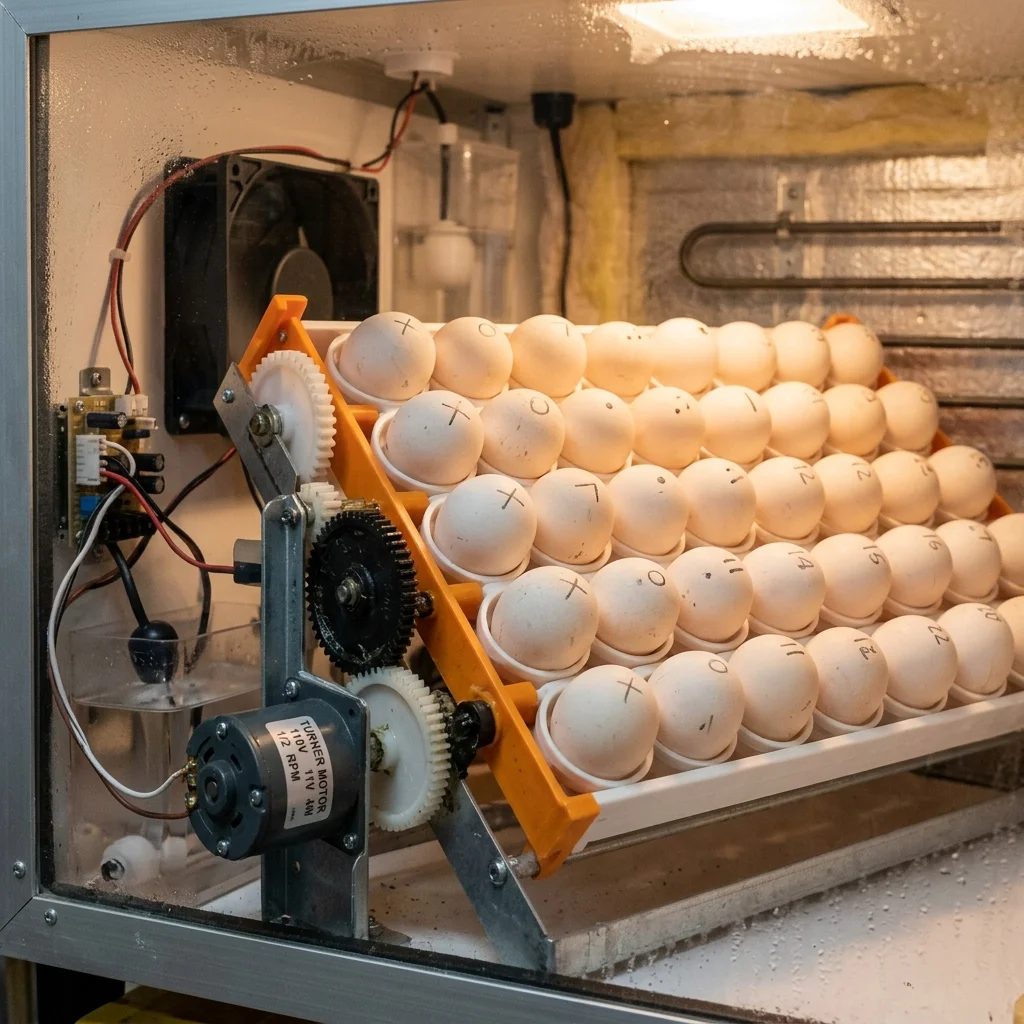
Show a repeatable turning routine.
The routine-care stage, where a machine can help only if it is actually working.
Calculate Lockdown DateQuick Answer
Automatic egg turners prevent early embryonic sticking and ensure healthy nutrient absorption. Test turner rotation before setting eggs by marking a spot on the tray and confirming movement, ensuring the egg size matches the rails or cups. Program turning for at least 3–5 times daily (or let the auto-motor run continuously), and ensure you stop turning and remove the turner on Day 18 (for chickens) to prepare for lockdown. Leaving the turner in the incubator during hatch day leads to injured chicks and malpositioned embryos.
What matters most
What this page helps you decide
This guide explains the operation and safety of automatic egg turners. The decision is when to use a turner, how to verify its movement, and when to remove it. Automatic turners reduce daily labor, but mechanical slips can cause silent hatch failures.
- Use automatic turners to ensure regular, consistent egg tilting when you cannot turn manually.
- Ensure the turner is removed at lockdown (Day 18 for chickens) to give hatching chicks a flat floor.
- Stop using a turner if eggs do not fit the cups or if the turner motor clicks or slips.
Why Turning Matters
In the first week of incubation, the embryo must float freely and not stick to the inner shell membrane. Turning tilts the egg, which helps the extra-embryonic membranes develop, absorbs yolk nutrients, and positions the chick for a normal hatch.
- Turning should occur a minimum of 3 to 5 times per day (every 4-6 hours).
- Automatic motors typically tilt eggs 45 degrees left and right every 1 to 2 hours.
- Manual turners must turn an odd number of times daily so the eggs do not spend two consecutive nights on the same side.
Testing and Troubleshooting Turners
A turner motor can run while the tray remains stationary due to stripped plastic gears. Check turner movement under a mock load before setting eggs. Place golf balls or dummy eggs in the cups and watch the rotation over 4 hours.
- Mark a pencil line on a test egg to easily verify that its position has changed.
- Listen for motor clicking, which indicates gears are slipping under weight.
- Ensure power wires are routed safely away from water reservoirs and fan blades.
Removing Turners at Lockdown
On Day 18 of chicken incubation (or 3 days before expected hatch for other species), active embryo development is complete and the chick must align with the air cell. Stop turning, unplug the turner, remove it from the machine, and place the eggs on the flat hatching floor.
- Leaving eggs in cups during hatch prevents chicks from orienting correctly to zip the shell.
- Chicks that hatch in turning trays can fall, get trapped under the rails, or suffer broken legs.
- Clean the turner immediately after removal to wash away dust before storage.
Reviewed against extension and veterinary sources. Adjust to your incubator manual and local conditions.