
High Altitude Egg Incubation
Altitude-specific incubation concerns for ventilation, moisture loss, and hatch timing.
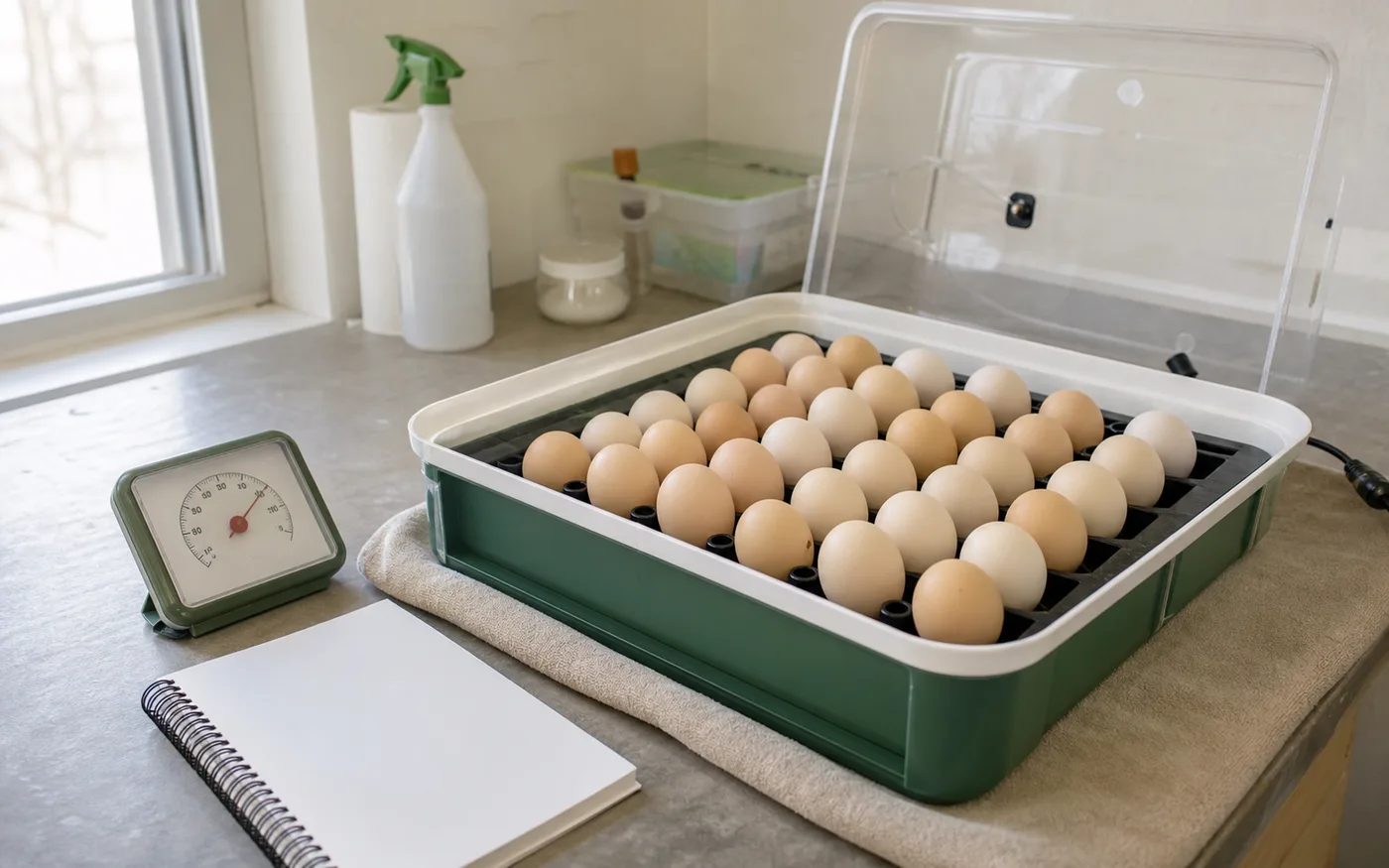
Show the dated plan before eggs are set.
The local-condition stage, where the room around the incubator can change how the same settings behave.
Track Air CellsQuick Answer
At higher altitude, air pressure and moisture behavior can make incubation less forgiving. Watch air-cell growth, ventilation, and hatch timing closely, and avoid assuming sea-level advice explains every result.
What matters most
Altitude changes the environment around the egg
Higher elevation can change evaporation and air exchange conditions. The incubator display may look normal while the eggs still need closer observation through air cells, weight loss, and hatch timing.
Do not seal the incubator to chase humidity
Fresh air still matters. If humidity is difficult to maintain, review water surface area, room dryness, and incubator guidance before closing vents beyond what the manual allows.
Use your own records
Local results are useful. Record set date, humidity pattern, air cells, hatch timing, and outcome so future high-altitude adjustments are based on evidence.
Reviewed against extension and veterinary sources. Adjust to your incubator manual and local conditions.