
Incubation Temperature Chart
Species temperature reference chart for common poultry incubation plans.
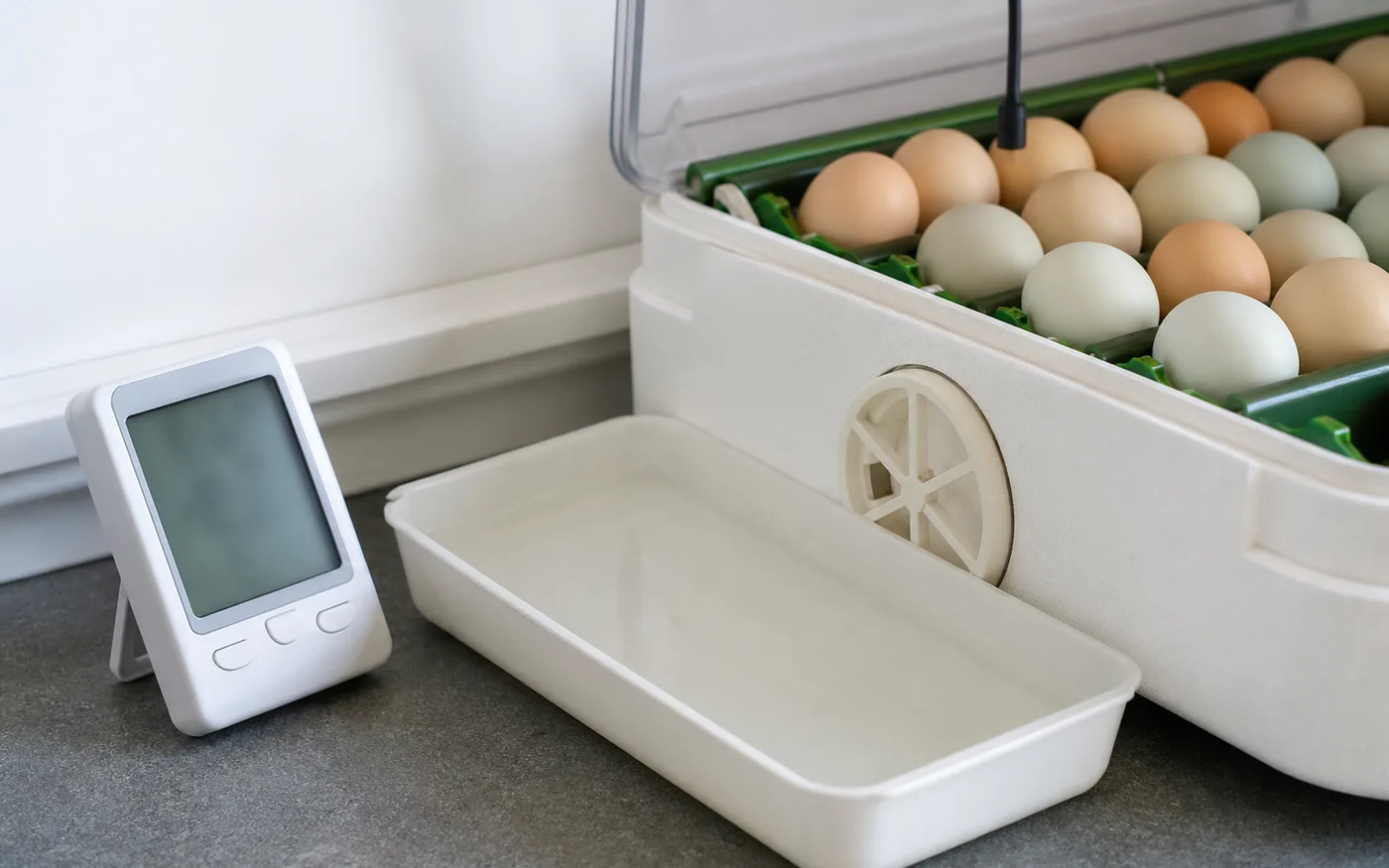
Show trusted measuring instead of guessing.
The reference stage, where a number only helps if the user knows where and how it is being measured.
Calculate Hatch DatesQuick Answer
Most common poultry incubation plans use a warm, stable incubator near the species guidance in the chart, but thermometer placement, forced-air versus still-air design, and the incubator manual change how readings should be interpreted.
What matters most
Temperature references by species
These are planning references, not a substitute for the incubator manual. Use them with a checked thermometer and species-specific hatch calendar.
- Chicken: commonly planned around 21 days.
- Duck: many domestic ducks use about 28 days; Muscovy ducks are longer.
- Quail: often around 17 to 18 days depending on type.
- Turkey: commonly planned around 28 days.
The reading depends on the incubator
A still-air incubator can have more temperature layering than a forced-air model. A probe in the wrong place can make the same hatch look too warm or too cool.
Use hatch timing as a calibration clue
Consistently early hatches can suggest warm conditions. Consistently late hatches can suggest cool conditions. Confirm with a trusted thermometer before changing the thermostat.
Reviewed against extension and veterinary sources. Adjust to your incubator manual and local conditions.